Continuing the Legacy of Humoral Medicine
with Dr. Ahmed Hani El Batal
.png)
%20(1080%20x%201920%20px.png)
Explanation of al-Suyūṭī’s statement: “One should not treat except the compliant (obedient) patient.”
Al-Ḥāfiẓ al-Suyūṭī and other physicians of the medical tradition affirm that successful treatment is achieved only through the patient’s obedience and full adherence to the physician’s instructions. Medicines alone are not sufficient if the patient neglects to adjust their lifestyle and diet in a manner appropriate to their temperament. This article highlights the importance of cooperation between physician and patient and explains in detail the six essential matters that constitute the foundation for preserving health and warding off illness, as stated in the books of classical medicine.

A quiet path lined with trees, symbolizing moderation and fresh air.

Choosing food and drink according to temperament;Example: a hot-wet temperament consumes cold-dry foods.
Natural retention allows food to remain until it is transformed into the structure of the organs; otherwise, it does not.
A quiet path lined with trees, symbolizing moderation and fresh air.
Al-Ḥāfiẓ al-Suyūṭī (1) said in his commentary on his book Itmām al-Dirāyah li-Qurrāʾ al-Nuqāyah (2), as follows:
“One should not treat except the compliant, because through his compliance the fruit of treatment appears in him, unlike the disobedient.”
I say: This is because if a patient does not obey the physician by following the treatment in full, but instead selectively chooses what he wishes to take and leaves what he wishes, or does the opposite of what the physician instructed—thinking that there is no harm in this—the physician should not treat him. For if harm befalls him, he will accuse the physician and not accuse himself.
Much of what is prescribed in treatment is unfamiliar to the patient, so he neglects it either because he is not accustomed to it, or because he does not consider it important, or because he is used to taking chemical medicines that conceal symptoms without removing the cause, without paying attention to food, drink, and many other matters that must be observed for the illness to disappear.
A person may be black bile-dominant (sudāwī) and eat black bile-dominant foods such as potatoes, ketchup, corn, and lentils, and drink coffee in large quantities, which causes many black bile dominant diseases—yet he does not want to change these habits. Or he may be yellow bile-dominant (ṣafrāwī) and eat yellow bile-dominant foods such as thyme, onion, and garlic, consume excessive spices and salt, and smoke heavily, which causes many yellow bile-dominant diseases—yet he does not want to change these habits. He may conceal from the physician what he does, believing that it has no effect. Consequently, he is not cured by the medication prescribed by the physician, and his trust in medicine and the physician weakens due to his lack of understanding of the true nature of medicine and of what the physician prescribed—because he uses medicine without paying attention to diet.
Physicians have said: Many diseases are repelled by diet alone and are not repelled by medicine alone. That is, one must heed the physician’s advice regarding the food suitable for the patient along with using medication; otherwise, benefit may not be achieved and harm may even increase. A person may sometimes be cured merely by listening to the physician’s dietary advice and may not need medicine.
The physician, in his treatment, takes care to preserve the original hotness (3) and the original wetness(4), and this is done through moderating the six essential matters (5). If the patient does not adhere to these six matters—due to ignorance of their benefits—and does not follow what the physician prescribed, recovery usually does not occur.
The Six Essential Matters Are:
1. The air surrounding our bodies:
It should be pure and free from smoke, dust, and mold.
-
The air should be hot water and wet for one who is cold and dry, of a black bile- temperament. If this is not possible, the air conditioner should be set to warmth with a humidifying device, and the house may be sprayed with rose water mixed with amber.
-
The air should be cold and wet for one who is hot and dry, of a black bile-dominant temperament. If this is not possible, the air conditioner should be set to coldness with a humidifier, and the house may be sprayed with rose water.
-
The air should be hot and dry for one who is cold and wet, of a phlegmatic temperament. If this is not possible, the air conditioner should be set to hotness, and the house may be sprayed with orange blossom water.
-
The air should be cold and dry for one of a sanguine temperament. If this is not possible, the air conditioner should be set to coldness, and the house may be sprayed with water infused with sandalwood.
Smoke such as charcoal smoke, hookah smoke, or cigarette smoke should not be spread in the house. Windows should be closed against dust, and mold should be removed from the walls of the home, and so on.
2. What is eaten and drunk:
One of moderate temperament may eat hot, cold, wet, and dry foods in moderation.
One who is hot and wet (sanguine) should eat cold and dry foods.
One who is hot and dry (yellow bile-dominant) should eat cold and wet foods.
One who is cold and wet (phlegmatic) should eat hot and dry foods.
One who is cold and dry (black bile-dominant) should eat hot and wet foods.
Included in this are suitable medicines according to the dominant temperament.
3. Psychological movement and rest:
Severe anger increases hotness, so the hot-tempered person should avoid it lest he suffer bleeding in the head or elsewhere, paralysis, or other diseases. Severe sadness increases coldness, so the cold-tempered person should avoid it lest he suffer a heart attack, stroke, or other illnesses. Therefore, physicians advise in many illnesses sitting in green spaces, listening to birdsong, smelling pleasant fragrances, bathing, wearing white clothing, using suitable perfumes, combing and oiling the hair with fragrant oils, and seeing only what brings joy—because this refreshes the innate hotness and strengthens the faculties. One should avoid things that cause anger, sadness, worry, and distress.
4. Physical movement and rest:
Exercise should be for about an hour, with moderate movements such that the skin stretches, reddens, and the body perspires lightly. Excessive rest cools the body, and excessive movement heats it, so temperament must be taken into account.
5. Sleep and wakefulness:
Excessive sleep cools and wettens, while lack of sleep heats and dries. One should increase or decrease sleep according to one’s temperament.
6. Retention (6) and evacuation (7):
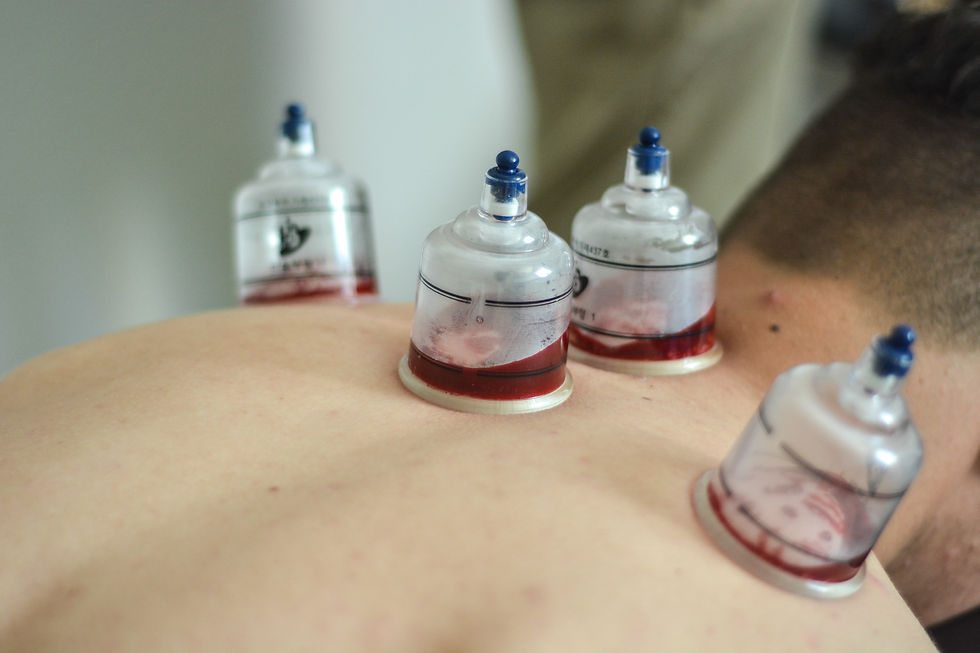
Natural retention is the keeping of food in the body until it transforms into the substance of the organs. Unnatural retention is the retention of what should be expelled, such as urine, stool, and corrupt humors. Evacuation is the expulsion of what should naturally be expelled, such as urine and stool, or the removal of corrupt humors through bloodletting (8), cupping, and laxatives (9), for example. This may be followed by oiling with olive oil (10) and anointing with oils that dissolve cold, wet phlegmatic substances, such as costus oil (11), chamomile oil (12), and others.
Conclusion
I say: The statements of the early physicians regarding the preservation of health through managing the six essential matters show that whoever maintains them will have a sound and healthy body, and whoever neglects them will have a body exposed to many diseases that are not removed merely by taking a pill morning and evening that conceals symptoms without removing causes. Rather, the disease will increase so long as one does not pay attention to managing these six essential matters, which have many details that these pages cannot encompass. Physicians, however, know them and guide people to them.
Notes:
(1) Al-Ḥāfiẓ Jalāl al-Dīn al-Suyūṭī, born in Cairo in 849 AH and died in 911 AH.
(2) Al-Nuqāyah, by al-Ḥāfiẓ Jalāl al-Dīn al-Suyūṭī, is a concise treatise summarizing several sciences, including anatomy and medicine.
(3) Original hotness in medical terminology: a pleasant, airy, hot essence without sharpness, burning, corruption, or harm, bestowed upon the body with the soul and departing with it.
(4) Original wetenss in medical terminology: a flowing wet substance whose relation to original hotness is like that of oil to a lamp.
(5) The six essential causes in medical terminology: matters indispensable to human life; when used properly, they are causes of health, and when misused, causes of illness.
(6) Retention: the accumulation of substances in the body, including the withholding of diarrhea, vomiting, sweating, urination, nosebleeds, bleeding, and the like, whether due to medicines or disease conditions.
(7) Evacuation: the expulsion of wastes from the body naturally, such as nosebleeds, vomiting, sweat, and similar processes; it may be general or partial, spontaneous or therapeutic.
(8) Bloodletting: an intentional incision into the arteries with a lancet.
(9) Laxatives: substances that move wetnesses from the arteries and organs toward the intestines for expulsion as stool.
(10) Olive oil: pressed from unripe green olives is cold and dry; when aged and sweet becomes cold and wet; pressed from sweet black olives is hot and wet; from bitter black olives is hot and dry.
(11) Costus oil is hot and dry.
(12) Chamomile oil is moderately hot and dry.